Returning to this series after a busy week away teaching in western Saskatchewan. This part of our journey along the east coast and into the Highlands was pursued and directed by Storm Babet. Luckily, we only met the edges of this system on our routes, staying about a day ahead of it.
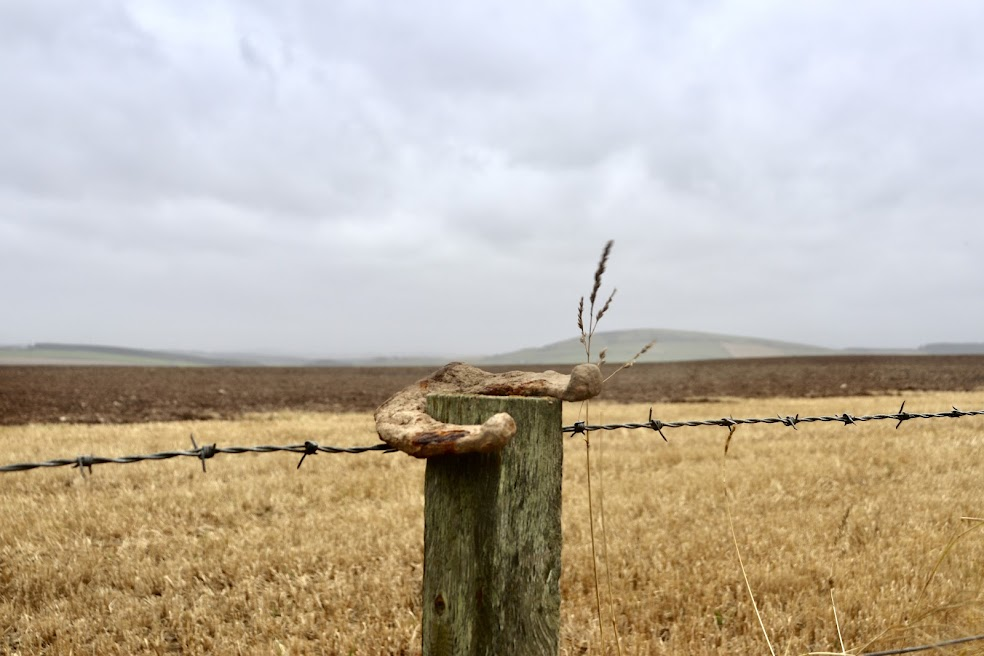
As Babet began to pick up speed and roll into the east coast, we took advantage of the morning to head from our cozy inland airbnb back to the coast to find the ruins of Findlater Castle. The wind coming off the North Sea was no joke. Google maps led us to a parking lot that seemed to be shared with a local cattle farmer’s yard just up the coast near Sandsend. From the barnside parking place, google told us to walk across a field towards the sea. Luckily I have my husband somewhat conditioned to wandering into the abyss based off atlas obscura coordinates at this point in our relationship (though, he doesn’t always adapt his footwear choices appropriately, but that’s for another post) so off into the nearing hurricane force wind we went.
After a brisk walk to the coast, we found what we were looking for. I was talked out of my intentions of hiking further towards the ruins on the cliffside, as a mist was beginning to join the wind and make the narrow, unofficial trails down to the remains for the 14th century stronghold a little sketchy.
Outside of Edinburgh Castle, this was our first castle stop on our journey. Also our first ruins. The current ruins are believed to be a 14th century rendition on top of 13th century foundations. The location and the set up of the castle offer a very game of throne-esque picture of what it may have looked like hundreds of years in the past. All that remains is lower levels of the castle built into the side of a cliff, facing the North Sea and resisting the relentless wind and waves washing down the east coast.
As with much of the coastal ruins of Scotland, the history of Findlater is believed to be rooted as far back as Viking raids and Pictish rulers. The history throughout Scotland but especially throughout the east coast seems to be rife with brutal take overs, familial betrayal and political jousting. It’s believed that the original 13th century structure was built to prepare for a Norwegian invasion, afterwhich the Norwegians held the castle for a short period. Sometime in the 14th century the Ogilvy family rebuilt, allegedly with the Laird’s intention to imprison his father in the cellar in order to continue an affair with his mother in law (says wikipedia anyway). The mother in this story eventually married a Gordon, who promptly took hold of the castle and imprisoned the mother. Mary Queen of Scots tried to get involved at one point to eject Gordon, during this 16th century drama, but it’s unclear as to if this was successful or not. The castle fell into disrepair in the 17th century as a new home was built for the earldom in nearby Cullen.
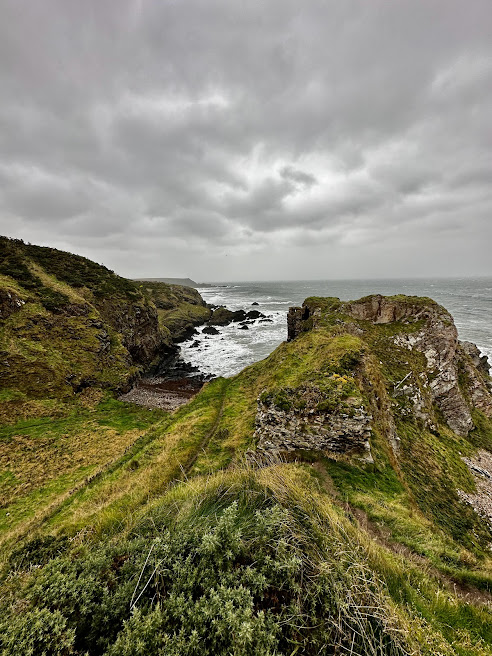

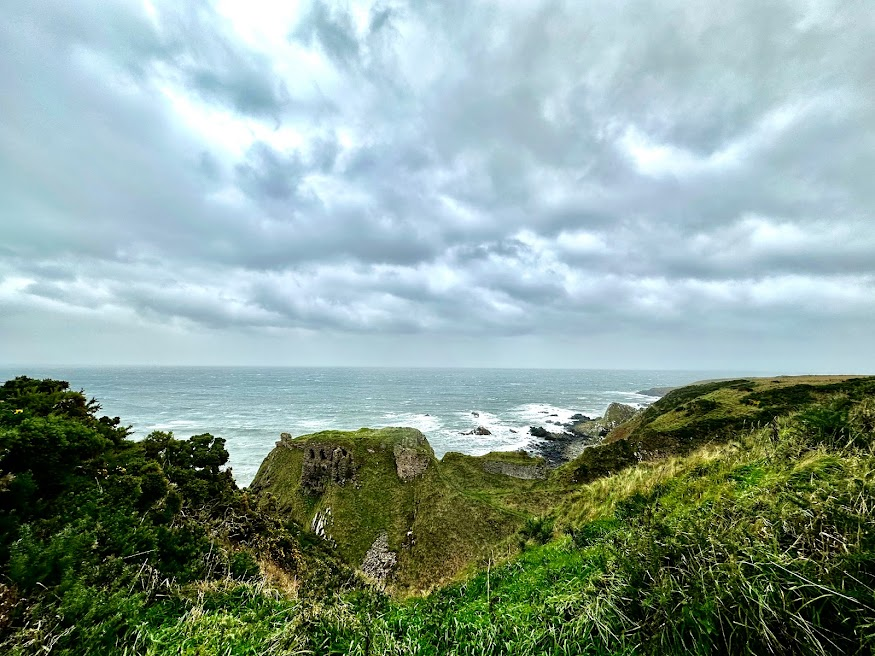
The history and the scenery very much spoke to energy of dissolution and bereavement that seem to be transmitted by these lonely ruins on the cliff. Standing in the wind and the mist, listening to the waves crash and feeling the dampness leach into my skeleton it isn’t hard to imagine tales of familial betrayal, violent seige and eventual abandonment. The dark edges of human nature seem to reside in this aesthetic, not necessarily in a way that feels haunting, simply in a starkness you cannot manufacture. It’s title, “Findlater”, translating from Norse roots “white cliff”, speaks also to that sense of being a little forgotten I seemed to feel as I looked over the ruins.
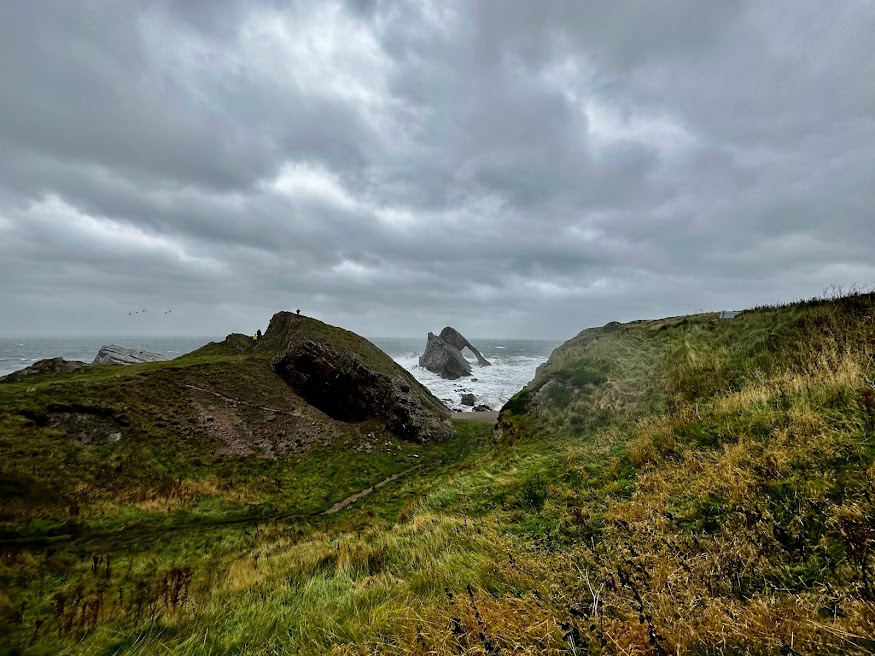
After finding Findlater we drove a little further up the coast to Bow Fiddle Rock. The wind was continuously picking up making for some pretty amazing demonstrations from mother nature around this natural rock formation in the sea.
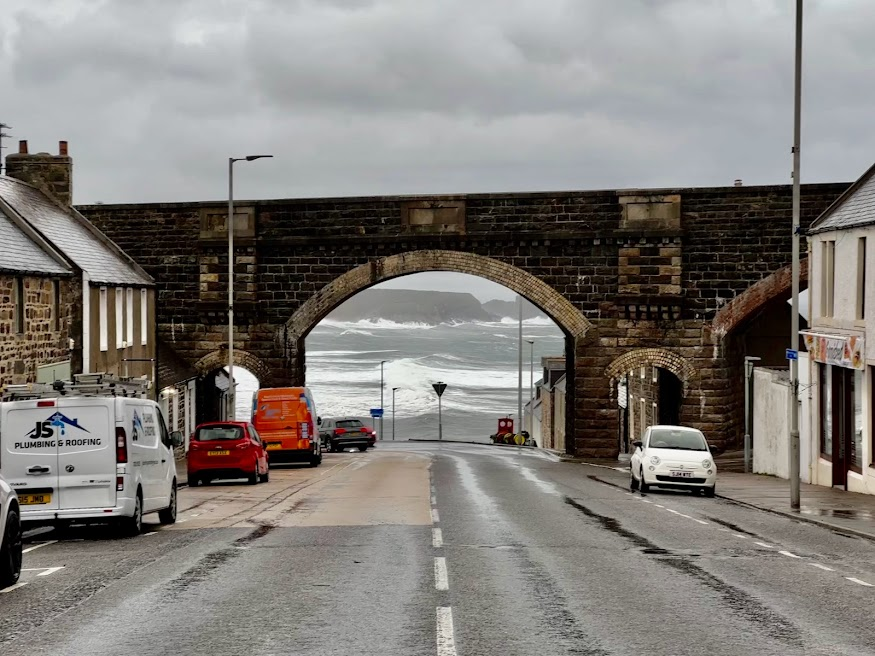
After spending a little time marveling at the views, we headed back towards where we came from, driving along the coast through the historic town of Cullen, allegedly where the famous Cullen Skink soup is said to have originated. The town has roots back to the 12th century, likely even earlier. It is said that somewhere in the hills surrounding the town three kings are buried from a battle in 962. A Dane, a Scot and a Norwegian marked by three isolated rocks.
Robert the Bruce founded the church in the village in the 14th century and it’s rumoured that the organs of his wife were buried in the chapel. The town has an impressive viaduct built in the late 1800s for railway operations that still stands today.
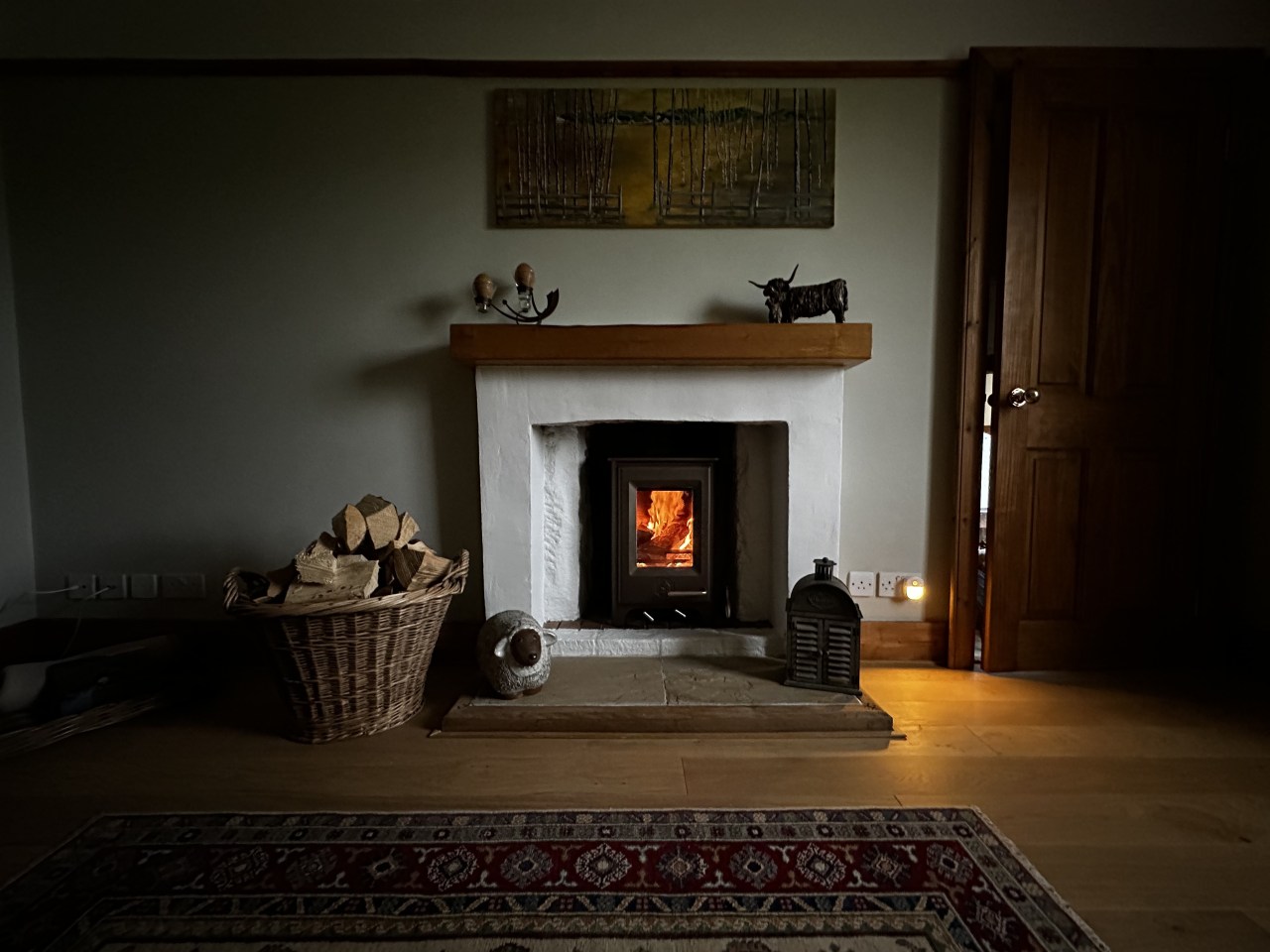
We had a quick lunch and got out of the rain in a local cafe. This was the perfect place to sample Cullen Skink, which we seem to have gotten the last bowl of (much to a local late lunch goer’s annoyance). In the environment of a chilly, old, coastal fishing village, a soup like Cullen Skink, a smoked fish chowder, makes a lot of sense. I personally wasn’t sad I tried it, as it did the trick to warm the bones up on that day, nor was I disappointed at never needing to have it again afterwards. After grabbing some snacks we hurried back to our cozy airbnb and got the fire place roaring, as Storm Babet settled in for the afternoon. A perfect afternoon to be settled with some tea on the couch, listening to wind howl outside. I was getting over a pretty nasty chest infection (thanks Edinburgh) at this point, and was thankful for an easy afternoon of rest to make use of.
That night I dreamt of a flowering herb that appeared with vibrant blue/purple flowers in a narrow fan shape. The whole plant seemed to spread out like a peacock’s tail, and in the dream it was being called “the peacock herb”. When I woke up, I was thinking about blue vervain, a herb I was beginning to know more and more about in my herbalism explorations, and a herb certainly sacred to the land I was in. I’m not sure about it’s links to peacocks, though I have found some sources that link Vervain to being a home for the larvae of the peacock butterfly. Much of Blue Vervain’s lore has roots into druidic times. It was used as a temple herb in Greek, Celtic and Roman temples. This plant has very much pursued me as I work through my herbalism apprenticeship. It is one of the first herbs I remember being curious about, though not much information was found early on. As I’ve reached the end of my formal apprenticeship, it has become a herb I use quite often, and one that works with me in the dream space frequently- appearing with nudges for both myself and for clients.
Egyptians believed that Vervain was created from the tears of Isis. Christian lore links it as the plant used to dress the wounds of Jesus after his crucifixion, and by the 16th century in apothecaries across Europe it was used for ailment after ailment. My intention is to create more herb specific posts on here soon, so I’ll save the bulk of Vervain’s written history for that perhaps.
Waking from a dream with vervain top of mind just added to my desire to connect to the land of my ancestry while exploring my present day identity. Waking that morning the wind still howled and the rain was falling. We had a breakfast made by our host, packed up and headed west to the next leg of our journey: Glencoe.
More on that next week, I need to get at my herbalism thesis with rest of my morning!


 The Memoir Project