Train like you mean it

I’ve been riding for a while. I’ve also been an athlete in many other sports for a while. I used to spend countless hours defending the sport of riding to my gym teacher, who didn’t want to let me count the hours I spent riding as hours towards my credit, this was the same man who coached me for 4 years in countless soccer, basketball, and badminton matches- and watched me participate in volleyball, track, cross-country, and awarded me athletic dedication awards in both my Varsity years.

The defending didn’t stop there, of course, the equestrian sport is not always highly regarded as the image of athleticism (on the rider’s part anyway). Those who don’t do it, don’t understand it. Yet, even those who don’t play basketball/football/gymnastics/etc consider those who participate athletes. You can clearly see the sweat dripping off those athlete’s bodies, you see the tole a performance has on them, and often through media you get a glimpse into their intense training regimes, nutrition, and the prices they pay for their sport.

Unfortunately, often the way the media represents the equestrian culture is questionable- and the most prominent image is one of catty drama on lesser known reality shows, the latest fashion craze, or as a sport exclusive to the wealthy and upper class. I can’t say that all of the above isn’t true, I’ve seen it all first hand- even the truly questionable “fashionista’s” on campus wearing “hunter” boots with, get this, fake spurs attached. However, I also know the other side of the lifestyle, one where sometimes success doesn’t only come to the ones wealthy enough to buy it, but also to those dedicated enough to work for it.

Don’t worry, I’m not about to write another one of those oh so popular posts about how equestrians should be held up to the same standard of athleticism as all those other athletes, and how it’s a tragedy how we aren’t thought of as super-human athletes. After all, we are in the Olympics, and “we put our lives at risk”, and blah blah blah “it’s just as hard as football”. It’s been said before, and all those rants are out there to be agreed with or argued with already. The world doesn’t need another.

I’m not going to rant on that, because to be honest, so much of this sport is unique to many others. And I know how hard other athletes work, I see it all the time in my career, and I’ve experienced it as an athlete in other sports myself. Every sport is a little bit different, and I don’t think it’s fair to complain because equestrians aren’t considered the same athlete as an athlete in another sport. Especially when often those who complain the most are the one’s who act least like an athlete.

Equestrians aren’t at the same standard as other athletes, nor are they above or below that standard. I’ve spent a lot of my University career doing projects on how aspects of what we do as riders takes serious athleticism, and changed many a doubter’s mind. The farther I get in my degree, the more people I run into that don’t need convincing- they have had experience working with or talking to equestrians that take themselves seriously- and therefore are taken seriously by others. That is what I would like to talk about. Why riders need to take themselves a little more seriously, and spend a little less time trying to convince other’s why they’re worthy of being called an athlete.

I believe in order to be an athlete, no matter what your sport, you have to earn that title– its not a label that should be freely given as soon as you sign up for a team or pay a certain amount of money for the equipment. It’s a mindset, a lifestyle, and a dedication to yourself and to your chosen purpose. It’s hard work.

In the last case study I did, on how to train an elite equestrian athlete (a project I had to fight to get permission to do), I originally thought I would spend a lot of time focusing on why a trainer should take the sport seriously- but instead ended up writing about why the rider who choses to go above and beyond just the training done in the saddle has the potential to do so much more in the saddle. A rider who trains like an athlete (in all definitions of the word), considering aerobic, strength, agility, and other types of strength training as a regular addition to time spent working directly with a horse as well as proper nutrition and a balanced lifestyle is often the rider who has more success then one who does all their training in the tack. Don’t get me wrong, a considerable amount of time working in the saddle is also a necessary part of being successful- but developing total body strength, awareness, and increasing overall self-confidence need to be developed off of the horse as well.

Why is functional strength valuable to a rider? To start, you’re on a 1200lb animal often moving at a decent pace toward large objects. If you don’t have the strength to hold yourself in position while that 1200lbs defies gravity for you, good luck sticking in the tack- let alone lasting around a full course. C often uses the phrase “Don’t pull, resist” when training. It takes more strength to patiently resist a horse pulling at your hands then it does to get into a tug-o-war with the same animal. You’re more likely to make your point with steady, consistent enduring then by fighting a losing battle. Strength is necessary, and a strong patient rider will over and over again be more effective then one who isn’t. Riding shouldn’t be a power-struggle, and developing the strength to effectively use your body in the saddle and develop a functional relationship with a horse will long-term prevent unnecessary conflict, mistakes, and injury.

What does body awareness have anything to do with riding? The horse is the one doing all the moving and balancing, right?

As a rider you gain an extra four legs, two floppy ears, and a tail. Being able to balance your own body through time and space is highly recommended if you plan on guiding that 1200lb addition around a large obstacle course. Knowing how to apply a precise amount of pressure in your ring finger, calf, or how to effectively shift your body weight in the tack to rebalance your mount and communicate the next move-  are all tools in the rider’s tool box, tools that are only sharpened with increased body awareness.

Yes, you could get away without the above two skills as a rider. You’d have a tougher time working with difficult horses, making it through week long competitions, and achieving the necessary precision to be the best.. but you’d get by. The confidence thing, though, is kind of a make it or break it thing. Confidence is the difference between a run-out at jump #2 and a clear round. Confidence is what trains a horse, and what makes a team work. In any sport, confidence is a trait found in every successful athlete.

What helps build confidence? Knowing your body’s capabilities, strength, awareness, countless time spent practicing, both skills directly related to the sport and developing those skills away from the sport as well.

Over the past couple years I’ve had a shift within my own mindset. The reason behind that was partly through education, but also through experience. The last few years have brought a huge increase in my own skill as a rider. Much of that I credit to joining a team of dedicated riders, under two of the most dedicated coaches I’ve met, in any sport. The drama that floats through the horse world doesn’t interrupt the patient process of skill development that takes place within this group. The results seen each season speak for themselves.
IMG_3495

I also credit that to an increase in confidence that I am doing what I need to be doing to be the best I can be in every aspect. I started paying less attention to if others took me seriously, and spent more time taking myself seriously. I started applying the training I did in other sports to training outside of the saddle. As my fitness (physical and mental) improved, my riding improved. I didn’t need to prove to others how riding should be taken more seriously. If I took it seriously, and trained like any other athlete, people started to take it seriously too.

In the New Year I will be running a training program for riders. Not only is this a first for me, teaching a class of this type, it’ll be something new for the MB riding community. I know many riders who do train outside of what they do on a horse- and it shows in their riding. Riding does require athleticism, more then many people realise, and the best way to demonstrate that is by being the best you can be. I am hoping to pass on some of my own experience both in riding and in the training industry to fellow riders through this program which is designed to enhance the skills we already have from being in the saddle.

A rider who is strong and balanced will create a strong and balanced horse.

I am hoping to periodically write bits of info about different aspects of training as an equestrian for readers as well, based on things that I incorporate into the training program, and things that I do in school. Stay tuned for those.

To all the riders, or athletes, out there reading this- What do you do to be your best? Is what you’re doing going to get you where you want to go?
Week 3- Just keeps gettin’ better

Another week has disappeared somewhere. Where does the time go?

Classes started this week- thankfully I only had time to take one. I can promise you that if I wasn’t working full time I would be in more. However the fact is money needs to be made and this one class fits in perfectly with that money making schedule. Even more awesomely a good portion of the class takes place in the gym practicing different lifts and exercises- which means I can coordinate my gym time with my brain time.

So this week went by so fast I can hardly remember most of it. Like seriously. Right now, though, sitting here working on this post- I feel like I’ve had three weeks in one. I’ve certainly done enough to cover more hours than have past. Monday after work I took Will out for a long hack down the dirt road to try and burn some of his energy. I’d guess we went about 4 miles, half of that either trotting or galloping, the other half walking or trotting serpentines in another attempt to regain his attention. Thoroughbreds. Some days. Tuesday I made a mad dash from the office to the barn, did a quick ride in the ring focusing on bending and lateral work and then another hack down the road before getting back downtown for class where I stayed until 9:30. That was a bit of a crazy day. Wednesday brought some relaxation time with Mom where we were treated to manis, pedis, and facials (new favourite thing). Thursday I decided that trying to make the barn and back before class was not worth it so instead I spent an hour in the gym doing sprints- before my 3 hr lab… in the gym… Writing this down I am re-considering whether I’m sane or not.

Friday was probably my favourite day this week (besides facial day, obvi), even though it snuck up on me AGAIN. Fridays are the days I drive like crazy to get out to the country to coach the local 4H club. Last week was a bit touch and go as it was week one for all of us- and not all the kids were there, and the horses were feeling spring. This week we had pretty much everyone, and I was able to split them into smaller groups. This was a lot more cohesive to progress then trying to do 10-15 kids and horses at once. That would be insanity. Both groups this week did a similar lesson plan- what I have named the Y exercise. For pretty obvious reasons. It’s in the shape of a “Y”. Original. I know. Anyway. I’ve done this exercise with one of my previous coaches, except with jumps and at a higher speed. The premise is having the horse and rider walk into the “Y”

|  |        <— like that except imagine it being a little more compact and closer together.

/ / \ \

while the instructor is standing at the top of the Y. As the pair walks into the stem or chute or whatever you want to call the base of the Y the instructor indicates a direction for them to turn (I was mean and waited to the last reasonable second). The rider is then responsible for directing their horse in a controlled fashion out of the exercise in whichever way indicated. If the instructor doesn’t signal left or right that would mean continue walking forwards- which more than a few of the kids took as a opportunity to try and run me over.. classy guys- love you too. If I hold both my hands up, that obviously means stop or halt. As I expected they caught onto the basics of this at a walk and then a jog pretty quick, so, for an extra challenge I suggested they could try doing the exercise with no hands- only using their legs to direct their horse. Predictably many of them, when asked if this would also be simple, said “yeah I can totally do that, no problemo coach!” (Okay they didn’t say it with that enthusiasm, but I take it where I can okay). Also predictably, that’s not how it went. (mwahaha). It didn’t take long for them to realize that their legs weren’t as effective without the pull of their reins. Point for me. Shwing.

My goal with this exercise was to start them thinking about what their body is doing during different phases of riding. Because I thoroughly enjoy pushing my students, some may call it being mean (lol), I randomly through in a stop sign for them when they were working with no reins. Earlier in the lesson we had discussed how shifts in our body can help to influence our horse’s speed/direction/balance etc. So I wanted to see if they had been listening when we talked about a shift in our body backwards will signal to the horse to slow down or stop (when in conjunction with other aids of course). Well, they were listening all right. When I signalled stop- more then one of them definitely used their body weight to try and get a halt. It looked like they had pulled the lever on their recliner- legs stretched forward, leaning back, arms to the side- like it was the hour after thanksgiving and they were enjoying a post-feast chill out. A little bit over the top… apparently we forgot to talk about subtle changes in body position. I couldn’t help but laugh. It was an excellent chance for us to talk about what subtle means and why we don’t want to launch ourselves backwards in an attempt to stop our horse.

Many of these kids have no interest in competitive showing, some would like to do rodeo, others, and I quote, “just want to run”. Some are only there because their parents put them in 4H and they have to participate. All of that leads to them not really understanding how basic equitation/horsemanship skills are going to help them in whatever they are doing with their horses. You think you can run a barrel pattern with no leg control? No balance in your horses body? In your body? Some of them have been relying on spurs because their “legs get tired when they don’t wear them”. Luckily those who have been doing that are a bit more experienced so I fully plan on taking away their crutch and getting some muscle burn on. One of the parents after that lesson came up to me and commented that I was really emphasising working on legs. And she was right, that does seem to be an emerging theme. After talking to each individual and asking their goals, many of the answers were control and getting their horses to respond better. Where does that all stem from? The rider’s body. What is the base for the rider? Their legs. One of the best things for young riders, I think, is teaching body awareness. Knowing what your body is doing, and where it needs to be will clear up a lot of confusion between you and your horse. Communication is a lot easier when each individual knows where they stand.

Another challenge I threw in for those who were doing the no reins things pretty well was backing through the exercise- which was a pretty difficult thing for almost everyone. Backing up their horse for 4 steps in a straight line was difficult, let along through poles in different directions. But I have to give them all credit, they all tried it out and didn’t give up when it got hard. I could see them working so hard to listen to the guidance I was providing and put words to action in the saddle. One girl, who was only on her second ride back after coming off rehab for a broken leg (she is still trying to get the strength back on one side but is so determined to work through it and ride while working on her rehab), even tried the backing- which I didn’t expect at all, knowing it would be extra challenging for her not having nearly the same strength on her recovering leg. Nonetheless, she gave it a shot- and predictably the horse made a nice backwards circle in the direction she didn’t have as much leg power. She tried it again and again- each time taking a little more from the tips I was giving her from the top of the exercise. After 4 or 5 tries, when everyone else was through and done- I looked and saw her giving it one more try- this time she did it PERFECTLY. And the look on her face when she got through the end of the “Y” was probably the best thing I’ve seen in a long time. That look of accomplishment.

I hope she felt as proud as I did!

Saturday I rode both the boys again, Felix was great as usual and Willard and I finally were able to do course work without pretending it was race day. Not that he would know what that is. Unless it’s a innate TB things. There were a few jumps throughout our courses that were absolutely breathtaking. Charlene even exclaimed after them that they were phenomenal. Pretty inexplainable, but I’ll try anyway. Willard would leave the ground at the perfect place and I would feel is neck and shoulders round up to me while his back followed the arch over the jump. There was an extra second at the top of the arc where time just stood still and you could feel what perfection was. Literally breathtaking. If any of you other riders reading this have felt that, you’ll know what I mean. It’s those small moments that keep us hungry for more. Those are what get us addicted to this sport.

Sunday was spent with the Rance clan for a Mother’s day breakfast, after that the day was pretty straight forward. I went to work at the gym- where I actually got to do some training with a client, which was exciting! Unplanned, but young kids came in (their mom had just bought them memberships), and were trying out the gym. My boss soon realized that they had no supervision and just asked me to keep an eye on them while they were there as he was off for the day. They quickly came to me with questions and it turned into me working with them for about 40 minutes or so going through different exercises and keeping them at safe weight loads. It was so much fun!

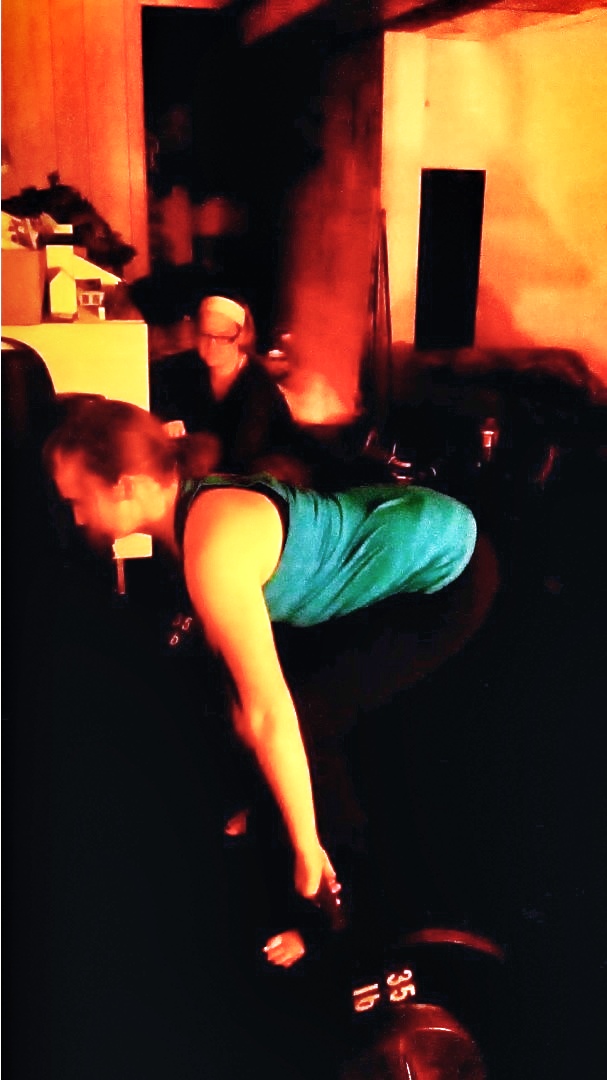
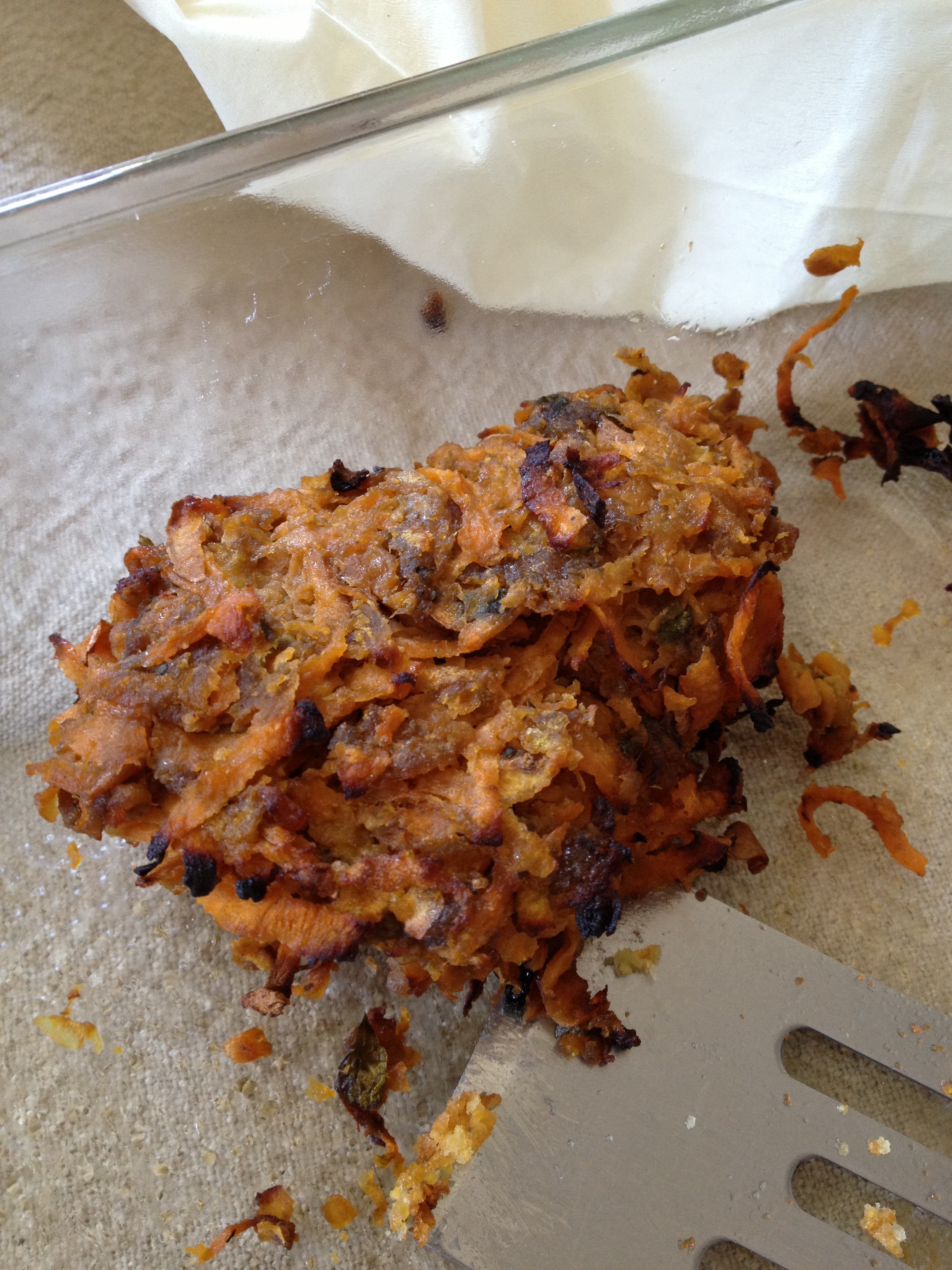
Now here we are, another week is about to start- so I’ll leave you with some pictures of some yummy things I made this week, and me dead-lifting my PR of 170lbs!

photo 1

Sweet potato apple pork patties. SO GOOD.

photo 2

Mash up of everything good, in a ball.

photo 5 photo 3 photo 4