After a few days in Edinburgh we were ready to move onwards. We picked up our rental car and headed North to Torryburn Beach. It took a while, but we eventually found what I was looking for: the grave of Lilias Adie.
Lilias Adie, a woman in her sixties, was accused of consorting with the devil in the early 1700s. She was imprisoned under the crime of witchcraft, tortured and interrogated until she eventually confessed. She passed away in prison before she could be executed for witchcraft. She is one of only women accused of witchcraft with a gravesite, as most were burned. The village feared she may rise from the dead, so they buried her in a wooden box between the low and high tide markers on Torryburn Beach. They covered her burial site with a massive stone slab. In 2019 her gravesite was relocated using original documents from the village church that led her persecution. Unfortunately, prior to this rediscovery, her remains had been stolen by grave robbers in the late 1800s. Her skull ended up in a private museum in 1875, then went to the University of St Andrews before going missing yet again. To this day, her skull remains missing.
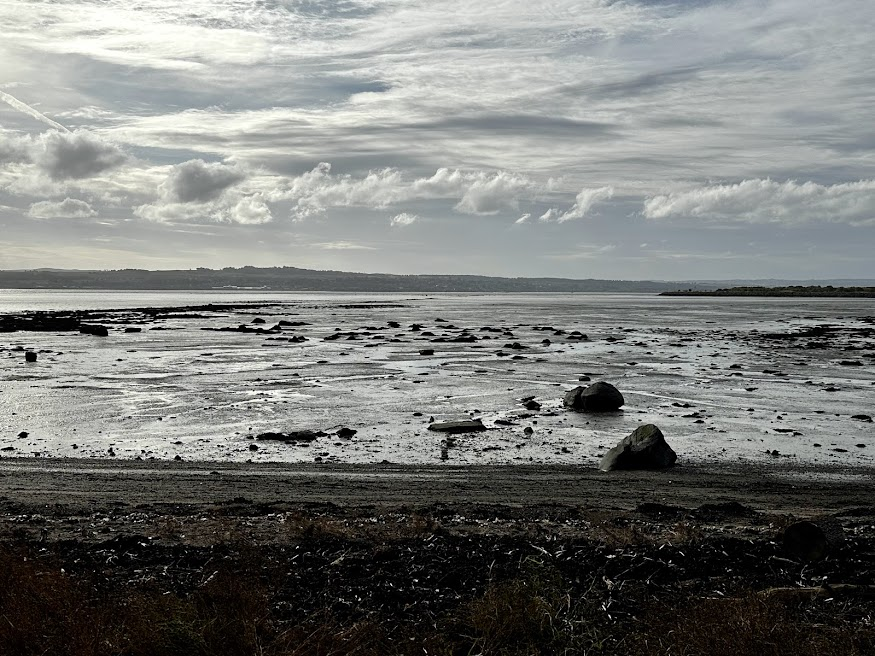
I’m not sure even in reflection I have the words for the sensations I was aware of while looking out over the tide. I think I was already becoming aware of a dissonance between wanting to seek out the past; to know more about my ancestry, the history of women, the history of a land my gene pool came from.. juxtaposed with the realization of how much gets lost to history. Lilias Adie’s story is known from the words written about her during her imprisonment and trial, by her accusers and persecutors. Likewise for many of the women who were tried and burned at the stake. Likewise for much of my ancestors. The reasons why they left where they were blending in with historical reasoning but not much personal record. The past remains a mystery, and perhaps that is as it should be.
Yet, standing looking out over the murky grave of Lilias, there is no choice but to remember even that which cannot be known. The fear she may rise from the dead has long passed, and now there is a hope that she will to share her story.
Garrett eventually dragged me away from staring into the abyss as the tides rose, and after grabbing some lunch in a nearby village we headed East to Dunino Den.
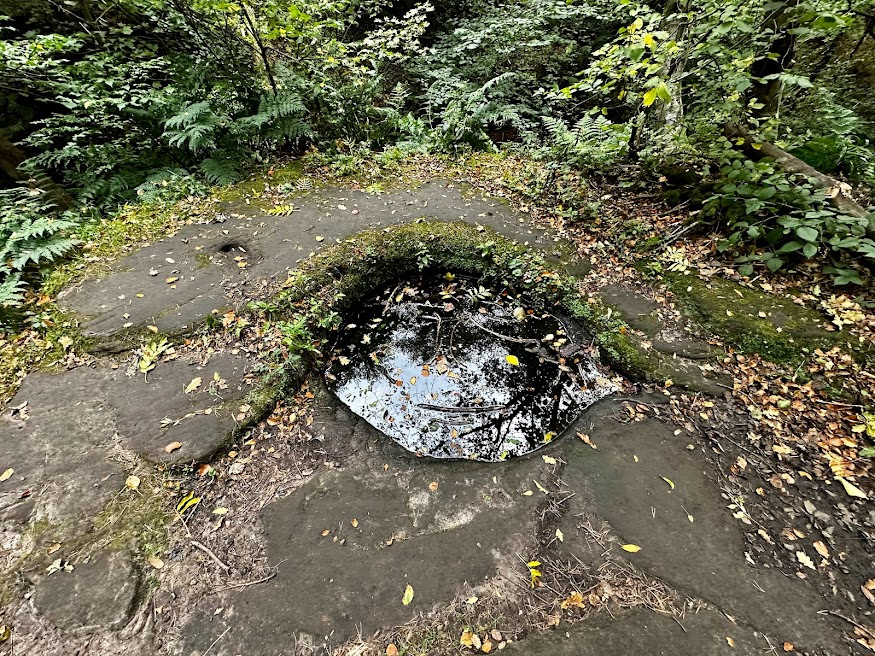
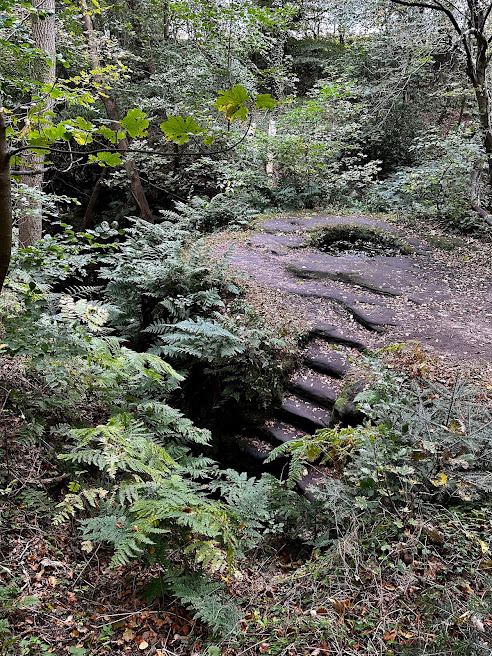
Tucked behind a 17th century church and graveyard and down a short path into the woods, the entrance to Dunino Den is guarded by the remains of a sacred well. The well appears to me as a watchful eye. Just to the left of the earthly observer and sacred waters is a staircase etched into the steps of the stone embankment, leading down into the den.
I’m not sure I had ever experienced such a palpable shift in energy as what we experienced descending into the ancient sacred site. The gentle forest sounds that existed as we stood at the well disappeared as we descended. Suspended silence took over. It truly and vividly was an experience of stepping to a place outside of time itself.

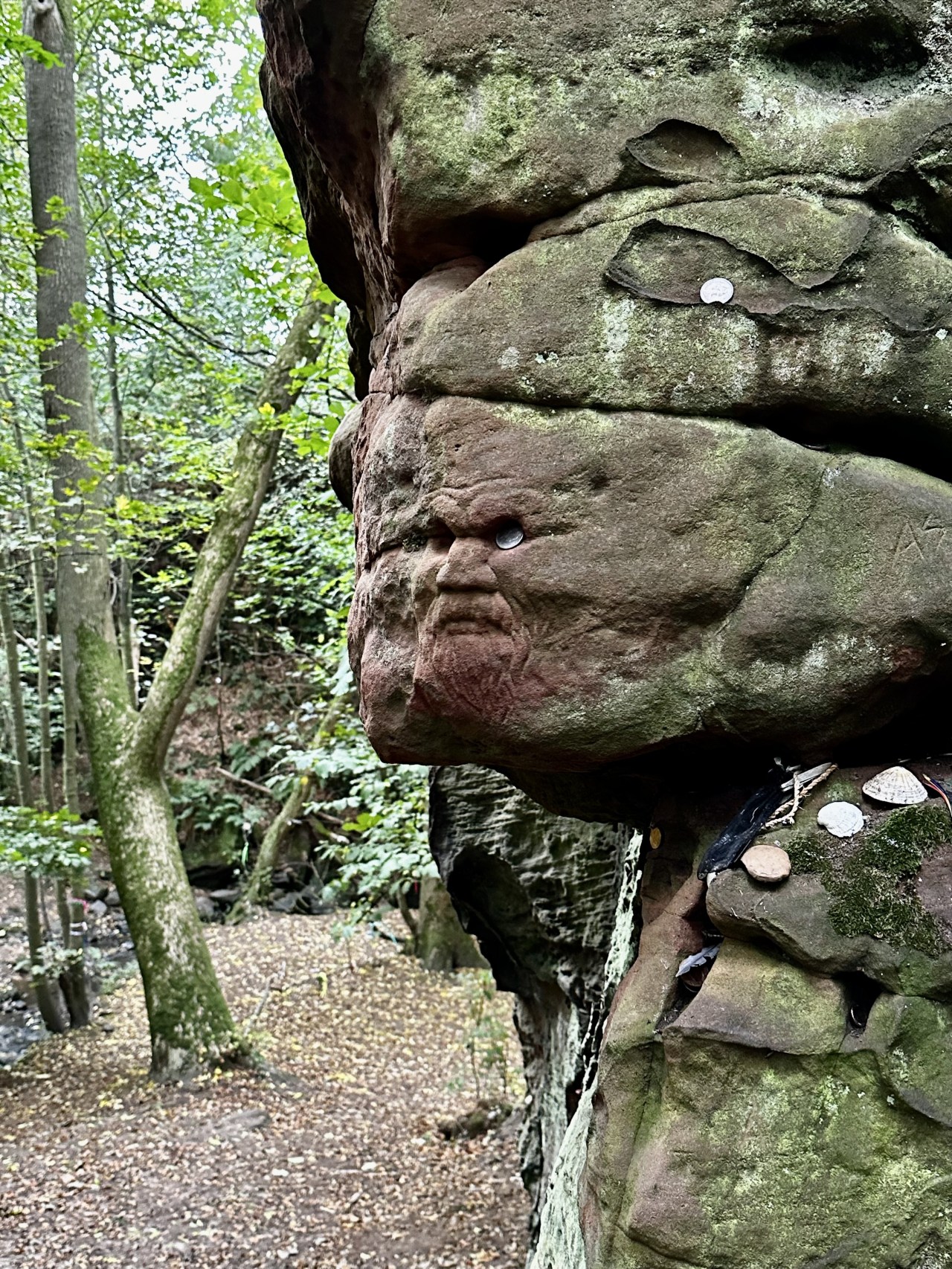
We were lucky enough to be the only human visitors present at the time, though it certainly did not feel like we were alone. The stone banks were full of various carvings, some very very old and some new. Faces, symbols, words, hand prints and offerings of coins, cloth and trinkets are scattered everywhere. Dunino Den has been dated back as a site in use as far back as Pictish times, and likely earlier than that. Standing looking around the “den” on the bank of a gently flowing creek I felt all at once welcomed back to a place I’d known in some lifetime and bombarded by watchful eyes of beings beyond what is known. Nothing malevolent, but observant nonetheless.
Dunino Den is believed to have been used as a ceremonial site for as far back as it can be dated. The nearby “modern” church and graveyard contains a large, neolithic age standing stone. This is a rare place where modern day religion existed without destroying more ancient spiritual grounds.
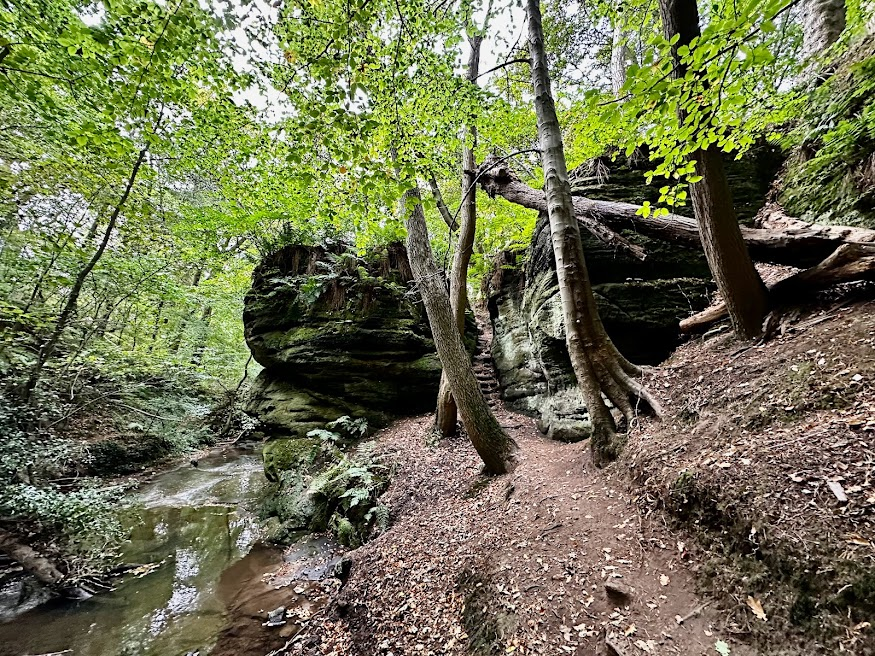
We stood in the Den as long as we were permitted to. There was a very clear moment where we were nudged to continue on. The sacred silence we were suspended in as we took in the grove was lifted and with thanks we headed back up the narrow stone steps, past the sacred pool and back towards our current timeline.
“In a direct and obvious sense, the past never leaves us, it is embedded in the present, is veined through our beliefs, our diet, our traditions, our way of moving through the landscape and much else.”
Alistair Moffat, The Hidden Ways
As we walked back through whatever veil seems to gently guard this sacred place, I was reminded that though many things are lost to written history, there is always opportunities to remember when we sit into non-linear ways of receiving information. As has happened to me more than a few times now visiting the “old world”, places other than my place of birth, our feet sometimes fall on paths we’ve walked in other lifetimes.

From here we drove upwards on the East coast to our home base for a few days near Turiff. The woodstove was lit for us when we arrived, and as Storm Babet was starting to howl on the horizon and so we made our place for the night.
More to come soon.
 The Memoir Project